There’s something slightly contradictory about one of the optional extras offered by many VPN companies. I’m talking about that rather expensive feature of a dedicated IP address attached to your VPN or proxy. We’re constantly told that VPNs help protect our privacy online. One way they do this is by allowing lots of customers to share the same public IP address.
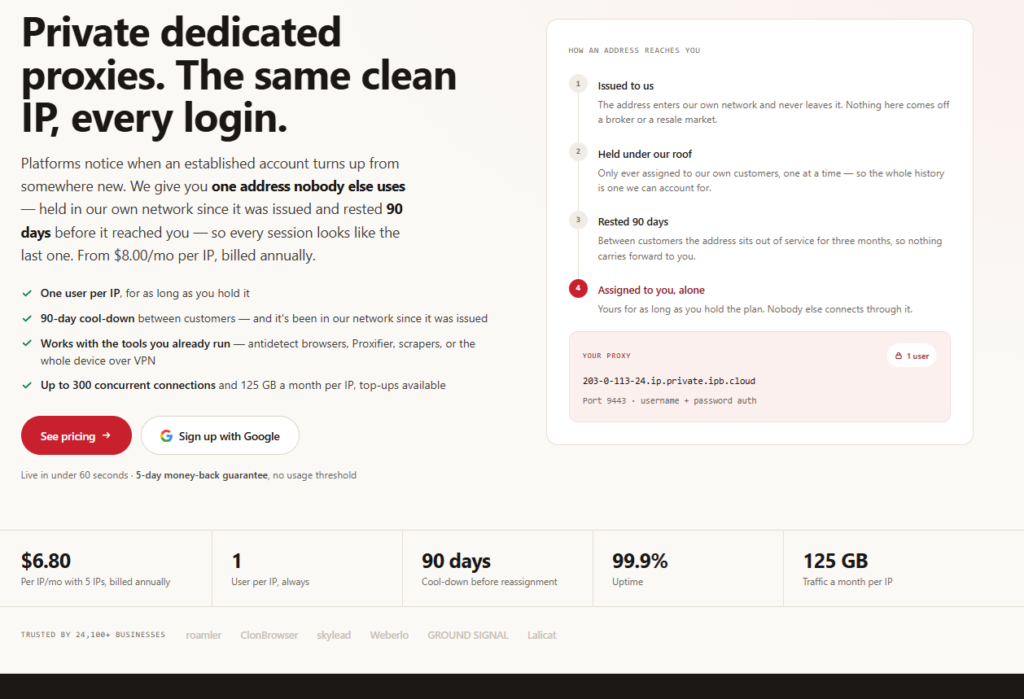
Yet some of those same providers will happily charge us extra for a dedicated IP address that nobody else uses. Of course this does make sense from their side, IP addresses are expensive to register and maintain. assigning one between a few thousand people is certainly cheaper than giving everyone their own address! So this isn’t necessarily a bad thing. Dedicated IP addresses have legitimate uses and in fact if you work or manage stuff online then they’re pretty much essential.
But if your main reason for using a VPN is privacy, it’s worth thinking carefully about what you’re giving up and it’s not quite as straight forward.
Why Sharing an IP Address Can Be a Good Thing
So you probably know this – when you connect to a typical commercial VPN server, the websites you visit don’t normally see your home IP address. Instead, they see an address belonging to the VPN provider. And here’s the important bit: that public address may be shared by lots of other people. Indeed the cheaper and free VPNs wil share it between thousands of others.
Therefore, from a website’s perspective, requests from lots of different VPN customers can therefore appear to originate from the same IP. That doesn’t make anybody completely anonymous and of course websites have plenty of other ways to recognise visitors. Nevertheless, sharing an address makes it more difficult to associate activity with one particular individual using the IP address alone.
There’s concealment in the crowd, cover in the herd, when you don’t want to be seen – it’s best not to stand out. It’s a relatively simple privacy benefit, and one that’s easy to overlook.
What Changes with a Dedicated IP?
Now imagine that instead of sharing an address with other VPN customers, you pay for one that’s reserved exclusively for you. So instead of connecting to these websites with a huge mass of other people then you’re back to being an individual. You still benefit from the VPN connection. Your traffic can still be encrypted between your device and the VPN server, and websites will normally see your VPN address rather than your home address.
But there’s an important difference.
If you repeatedly visit websites using the same dedicated IP, that address becomes a more consistent identifier. Separate websites may be able to associate visits with the same address, particularly if they share information through advertising, analytics or tracking systems. They can also use other methods too like browser fingerprinting and linking accounts. Having a genuinely uniwue IP address doesn’t automatically reveal your name or identity, but it removes some of the ambiguity provided by a crowded shared VPN address.
In other words, exclusivity isn’t necessarily desirable when you’re trying to avoid being recognised online. 
Does This Make Dedicated IPs Unsafe?
Not at all. It’s important not to confuse privacy, anonymity and security. Indeed, a slight drop in privacy is arguably worth it for many people especially those who work online. You can create all sorts of problems for linked accounts and secure websites by using an IP address used by thousands of other people.
A dedicated IP doesn’t automatically weaken the encryption used by your VPN, and there are perfectly sensible reasons for wanting a consistent address. Perhaps your employer restricts remote connections to an approved list of IP addresses. Maybe you run a private server or need reliable access to a system that doesn’t appreciate your address changing regularly.
Those are genuine practical advantages and there are actually many more. Many people need to know that their IP address is also being used by someone up to no good online. Rememeber you have no control over who you are sharing with when using a VPN. If you’re using a free VPN that doesn’t require any payment or credential you’re almost certainly hsaring with some very bad people too! But, the problem with paying more for a dedicated IP arises when customers assume that because a feature costs more, it must offer greater privacy or stronger protection.
That’s often not necessarily true.
What About Websites Blocking VPNs?
There’s another argument often used to promote dedicated IP addresses: fewer CAPTCHAs and fewer blocked websites. And to be fair, there’s some logic behind it.
Popular shared VPN addresses sometimes attract additional scrutiny because of the behaviour of other users. Having your own address may help you avoid that particular problem.
However, dedicated doesn’t mean invisible, far from it. Many, indeed most dedicated VPN addresses still belong to data-centre networks that websites can identify as VPN infrastructure. So paying extra doesn’t guarantee that streaming platforms, banking websites or other services will treat you like an ordinary residential broadband customer.
And even if a dedicated address avoids some shared-IP problems, it doesn’t prevent tracking through browser fingerprints, cookies or accounts you’re logged into.
Choosing the Right Kind of VPN Connection
For me, the interesting question isn’t whether dedicated IP addresses are good or bad. It’s whether they solve a problem you actually have.
If you’re struggling to connect to a work system because it requires a fixed, approved IP, then a dedicated VPN address might be exactly what you need. If you manage valuable accounts on social media platforms then you’d really be fooolish to connect to them with an IP address which might be connected to an online predator or a cyber crime gang. That reputation could be enough to tarnish or even destroy a valuable Instagram or Facebook account.
But if your priority is ordinary private browsing, the shared IP addresses included with standard VPN subscriptions often make more sense. You don’t necessarily want to stand out from everybody else. Sometimes being one of hundreds of people behind the same address is precisely the advantage.
A dedicated IP can make your connection more convenient, but convenience and anonymity aren’t the same thing.
That’s the distinction I explore in my accompanying video, looking at shared versus dedicated VPN addresses and whether the additional cost is justified.